|
Age group |
Guidelines |
Types of Physical Activity |
Benefits |
||
|
<5 years |
· Children of pre-school age who are capable of walking unaided should be physically active daily for at least 180 minutes (3 hours), spread throughout the day. · All under 5s should minimize the amount of time spent being sedentary (being restrained or sitting) for extended periods. |
· Activities which involve movements of all the major muscle groups, i.e. the legs, buttocks, shoulders and arms, and movement of the trunk from one place to another. · Energetic play, e.g. climbing frame or riding a bike · More energetic bouts of activity, e.g. running and chasing games · Walking/skipping to shops, a friend’s home, a park or to and from a school |
· Improves cardiovascular health · Contributes to a healthy weight · Improves bone health · Supports learning of social skills · Develops movement and co-ordination |
||
|
Suggestions: Reducing time spent watching TV, using the computer or playing video games Reducing time spent in a pushchair or car seat – this can also help to break up long periods of sedentary behavior. |
|||||
|
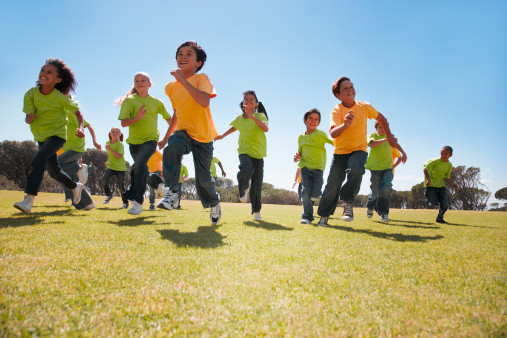
5-18 years |
· All children and young people should engage in moderate to vigorous intensity physical activity for at least 60 minutes and up to several hours every day. · Vigorous intensity activities, including those that strengthen muscle and bone, should be incorporated at least three days a week. · All children and young people should minimise the amount of time spent being sedentary (sitting) for extended periods. |
Moderate intensity physical activities: · Bike riding · Playground activities Vigorous intensity physical activities: · Fast running · Sports such as swimming or football · Swinging on playground equipment · Hopping and skipping · Sports such as gymnastics or tennis |
· Improves cardiovascular health · Maintains a healthy weight · Improves bone health · Improves self-confidence · Develops new social skills
|
||
|
Suggestions: Reducing time spent watching TV, using the computer or playing video games Breaking up sedentary time such as swapping a long bus or car journey for walking part of the way. |
|||||
|
19-64 years |
· Adults should aim to be active daily. Over a week, activity should add up to at least 150 minutes (2½ hours) of moderate intensity activity in session of 10 minutes or more–one way to approach this is to do 30 minutes on at least 5 days a week. · Alternatively, comparable benefits can be achieved through75 minutes of vigorous intensity activity spread across the week or combinations of moderate and vigorous intensity activity. · Adults should also undertake physical activity to improve muscle strength on at least two days a week. · All adults should minimise the amount of time spent being sedentary (sitting) for extended periods. |
Moderate intensity physical activities: · Brisk walking · Cycling Vigorous intensity physical activities: · Running · Sports such as swimming or football Physical activities that strengthen muscles: · Exercising with weights · Carrying or moving heavy loads such as groceries |
· Reduces risk of a range of diseases, e.g. coronary. heart disease, stroke, type 2 diabetes · Helps maintain a healthy weight · Helps maintain ability to perform everyday tasks with ease · Improves self-esteem · Reduces symptoms of depression and anxiety |
||
|
Suggestions: Reducing time spent watching TV, using the computer or playing video games Taking regular breaks at work Breaking up sedentary time such as swapping a long bus or car journey for walking part of the way |
|||||
|
65+ years |
· Older adults who participate in any amount of physical activity gain some health benefits, including maintenance of good physical and cognitive function. · Over a week, activity should add up to at least 150 minutes (2½ hours) of moderate intensity activity in bouts of 10 minutes or more – one way to approach this is to do 30 minutes on at least 5 days a week. · For those who are already regularly active at moderate intensity, comparable benefits can be achieved through 75 minutes of vigorous intensity activity spread across the week or a combination of moderate and vigorous activity. · All older adults should minimise the amount of time spent being sedentary (sitting) for extended periods. |
Moderate intensity physical activities: · Brisk walking · Ballroom dancing Vigorous intensity physical activities: · Climbing stairs · Running Physical activities that strengthen muscles: · Carrying or moving heavy loads such as groceries · Activities that involve stepping and jumping such as dancing · Chair aerobics |
· Helps maintain cognitive function · Reduces cardiovascular risk · Helps maintain ability to carry out daily living activities · Improves mood and can improve self-esteem |
||
|
Suggestions: Reducing time spent watching TV; Taking regular walk breaks around the garden or street; Breaking up sedentary time such as swapping a long bus or car journey for walking part of the way |
|||||
Ref: UK physical activity guidelines. Department of Health.
 মেয়েলী যে কোনো সমস্যা হলেই গাইনি ডাক্তারের শরণাপন্ন হতে হয়। আর গাইনি ডাক্তারের শরনাপন্ন হতে অনেক নারীই কিছুটা দ্বিধাবোধ করেন। বিশেষ করে ডাক্তার যদি পুরুষ হয়ে থাকেন তাহলে অধিকাংশ সমস্যার কথাই জানাতে পারেন না নারীরা। গাইনি ডাক্তারের কাছে কিছু বিষয় লজ্জায় এড়িয়ে যান বেশিরভাগ রোগী। কিন্তু অত্যন্ত...
 বেসরকারি ফার্মে চাকরি করেন অর্ষা। প্রায়ই বাসায় ফেরার পর তাকে রাত জেগে অফিসের কাজ করতে হয়। রাত জেগে কাজ করার ফলে ভালো ঘুম হয় না। তাই পরদিন সকালে অফিসে যাওয়ার পর খুবই ক্লান্তি লাগে তার। মাঝেমধ্যে এ বিষয় নিয়ে তিনি দুশ্চিন্তায় পড়ে যান। ঠিকমতো ঘুমের অভাবে চোখের নিচেও কালি পড়েছে। প্রায়ই অফিসের...
 ছোট থেকে বড় সকলের কাছেই পেয়ারা খুবই প্রিয় একটি ফল৷ পেয়ারায় বিভিন্ন স্বাস্থ্য উপকারিতা রয়েছে, আর এই কারণেই এটি ‘সুপার ফ্রুট’ নামে পরিচিত৷ আপনিও জেনে নিন এই ‘সুপার ফ্রুট’এর গুণাগুণ৷
• শরীরের অতিরিক্ত শর্করা শুষে নিতে পারে পেয়ারা৷ এছাড়াও এতে...
ছোট থেকে বড় সকলের কাছেই পেয়ারা খুবই প্রিয় একটি ফল৷ পেয়ারায় বিভিন্ন স্বাস্থ্য উপকারিতা রয়েছে, আর এই কারণেই এটি ‘সুপার ফ্রুট’ নামে পরিচিত৷ আপনিও জেনে নিন এই ‘সুপার ফ্রুট’এর গুণাগুণ৷
• শরীরের অতিরিক্ত শর্করা শুষে নিতে পারে পেয়ারা৷ এছাড়াও এতে...
 গ্যাস্ট্রিক বা এসিডিটির সমস্যা আমাদের দেশে খুবই স্বাভাবিক ব্যপার। অনেককে বছরের প্রায় সময়ই ভূগতে হয় এ সমস্যায়। আধুনিক চিকিৎসা বিজ্ঞানে এর প্রতিকার হিসাবে পাওয়া যায় অনেক নামি দামি ওষুধ। কিন্তু আমাদের হাতের কাছের বিভিন্ন প্রকৃতিক জিনিস দিয়ে যদি করা যায় এর নিরাময়, তাহলে বাড়তি টাকা খরচ করার কি...
 ওজনটা নিয়ে অনেকেই বেশ বিপাকে আছেন। ওজন যত সহজে বাড়ে তত সহজে কমে না। কঠিন ডায়েট চার্ট, দীর্ঘ সময় ব্যায়াম করে ঘাম ঝরানোর কাজটাও খুবই কঠিন। তাই ওজন কমানোর ইচ্ছে থাকলেও কমানো হয়ে ওঠে না। যারা চট জলদি ওজন কমাতে চান একেবারে কষ্ট ছাড়াই তারা রাতের খাবারের মেন্যুটা একটু বদলে ফেলুন। রাতের খাবারে অন্য সব...
 ট্রেন কিংবা বাস স্টেশনে, লঞ্চঘাটে, স্টেডিয়ামে, হাট-বাজারে এখনো শোনা যায় ফেরিওয়ালার ডাক—‘এই ডিম ডিম ডিম...সেদ্ধ ডিম...মুরগির ডিম...হাঁসের ডিম।’ আর তা হবেইবা না কেন? সহজলভ্য পুষ্টির উত্স হিসেবে ডিমের তুলনা কেবল ডিমই হতে পারে। তাই বাড়িতে বা রেস্তোরাঁয় সকাল-বিকেলের নাশতাতেই হোক...