Skipping Breakfast May Increase Coronary Heart Disease Risk
What Is A Healthy Weight?
Body Mass Index and Waist-Hip Ratio
০১ অগাস্ট, ১৩
Viewed#: 179
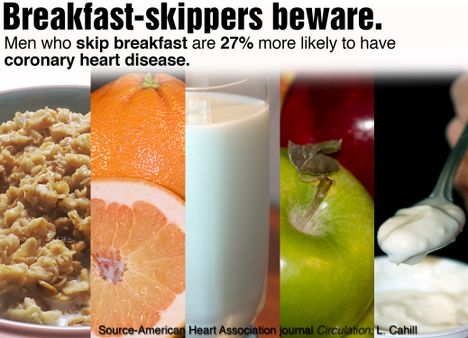
A large 16-year study (reported in the American Heart Association journal, Circulation) finds men who reported that they skipped breakfast had 27 percent higher risk of heart attack or death from coronary heart disease. The timing of meals, whether it's missing a meal in the morning or eating a meal very late at night, may cause adverse metabolic effects that lead to coronary heart disease. Even after accounting for modest differences in diet, physical activity, smoking and other lifestyle factors, the association between skipping breakfast (or eating very late at night) and coronary heart disease persisted.
What Is A Healthy Weight?
Over the last few decades, using BMI (body mass index) was seen as an excellent means for calculating a person's healthy weight. However, BMI, as you will see later on in this article, is at best, a ballpark calculation with several limitations. BMI is more useful when studying large populations, rather than individuals.
Body Mass Index and Waist-Hip Ratio
BMI (Body Mass Index) and Waist-Hip Ratio are two ways doctors and other health care professionals gauge a person's weight, when
In North America, Europe and much of the rest of the world, the following BMI (kg/m2) point to how a person's weight is classified:
• 18.5 - underweight
• 18.5 to 24.999 - ideal
• 25 to 29.999 - overweight
• 30+ - obese
• 40 - morbidly obese
People have different bone densities and body-fat ratios, BMI does not take these factors into account. An osteoporosis patient may have a lower BMI than another individual without the conditions, however, it is likely that if only BMI measurements were used, the osteoporosis patient would be deemed as healthier. BMI has the following serious drawbacks:
• It underestimates body fat content in obese or overweight people
• It overestimates body fat content in muscular or lean individuals
Waist-Hip Ratio
• Waist-Hip Ratio, also known as WHR, looks at the ratio of a person's waist circumference with their hip circumference. The smallest waist measurement is taken, which is generally just above the navel, this total is divided by their hip circumference at its widest part.
Many experts criticize BMI as not generally useful in evaluation of health. It is at best a rough ballpark basic standard that may indicate population variations, but should not be used for individuals in health care.
Target WHRs are different for males and females:
WHR for men
• - <0.9 - means he has a very low risk of having cardiovascular health problems
• - From 0.9 to 0.99 - means he is at moderate risk of cardiovascular health problems
• - >1 - means his risk of cardiovascular problems are high
WHR for women
• - <0.8 - means she has a very low risk of having cardiovascular health problems
• - From 0.8 to 0.89 - means she is at moderate risk of cardiovascular health problems
• - 0.9 or more - means her risk of cardiovascular problems are high
Waist-Hip Ratio versus Body Mass Index
WHR will give you a much better idea regarding how near you are to a healthy weight, compared to BMI. Apple-shaped people have larger WHRs and tend to have a higher risk of developing diseases, such as cardiovascular problems, compared to pear-shaped individuals. An apple-shaped person has more fat built up on the waist, while the fat on a pear-shaped person has accumulated on their hips. Females whose WHR is below 0.8 tend to be healthier and more fertile than their higher WHR counterparts. A female WHR of 0.8 means she runs a much lower risk of developing many cancers, cardiovascular disorders, and diabetes. Males whose WHR is 9 or less have the same benefits, while those with higher WHR have similar health risks (to women in the paragraph above).
What are the drawbacks with WHR?
- it still does not measure the total body fat percentage of the individual, or their muscle-to-fat ratio. However, most agree it is a superior predictor of health risks, and a better measure of ideal weight.
- it still does not measure the total body fat percentage of the individual, or their muscle-to-fat ratio. However, most agree it is a superior predictor of health risks, and a better measure of ideal weight.
Next Health Tips:
Physical Activity Guideline for different age groups
Previous Health Tips:
Why Obesity
 মেয়েলী যে কোনো সমস্যা হলেই গাইনি ডাক্তারের শরণাপন্ন হতে হয়। আর গাইনি ডাক্তারের শরনাপন্ন হতে অনেক নারীই কিছুটা দ্বিধাবোধ করেন। বিশেষ করে ডাক্তার যদি পুরুষ হয়ে থাকেন তাহলে অধিকাংশ সমস্যার কথাই জানাতে পারেন না নারীরা। গাইনি ডাক্তারের কাছে কিছু বিষয় লজ্জায় এড়িয়ে যান বেশিরভাগ রোগী। কিন্তু অত্যন্ত...
 বেসরকারি ফার্মে চাকরি করেন অর্ষা। প্রায়ই বাসায় ফেরার পর তাকে রাত জেগে অফিসের কাজ করতে হয়। রাত জেগে কাজ করার ফলে ভালো ঘুম হয় না। তাই পরদিন সকালে অফিসে যাওয়ার পর খুবই ক্লান্তি লাগে তার। মাঝেমধ্যে এ বিষয় নিয়ে তিনি দুশ্চিন্তায় পড়ে যান। ঠিকমতো ঘুমের অভাবে চোখের নিচেও কালি পড়েছে। প্রায়ই অফিসের...
 ছোট থেকে বড় সকলের কাছেই পেয়ারা খুবই প্রিয় একটি ফল৷ পেয়ারায় বিভিন্ন স্বাস্থ্য উপকারিতা রয়েছে, আর এই কারণেই এটি ‘সুপার ফ্রুট’ নামে পরিচিত৷ আপনিও জেনে নিন এই ‘সুপার ফ্রুট’এর গুণাগুণ৷
• শরীরের অতিরিক্ত শর্করা শুষে নিতে পারে পেয়ারা৷ এছাড়াও এতে...
ছোট থেকে বড় সকলের কাছেই পেয়ারা খুবই প্রিয় একটি ফল৷ পেয়ারায় বিভিন্ন স্বাস্থ্য উপকারিতা রয়েছে, আর এই কারণেই এটি ‘সুপার ফ্রুট’ নামে পরিচিত৷ আপনিও জেনে নিন এই ‘সুপার ফ্রুট’এর গুণাগুণ৷
• শরীরের অতিরিক্ত শর্করা শুষে নিতে পারে পেয়ারা৷ এছাড়াও এতে...
 গ্যাস্ট্রিক বা এসিডিটির সমস্যা আমাদের দেশে খুবই স্বাভাবিক ব্যপার। অনেককে বছরের প্রায় সময়ই ভূগতে হয় এ সমস্যায়। আধুনিক চিকিৎসা বিজ্ঞানে এর প্রতিকার হিসাবে পাওয়া যায় অনেক নামি দামি ওষুধ। কিন্তু আমাদের হাতের কাছের বিভিন্ন প্রকৃতিক জিনিস দিয়ে যদি করা যায় এর নিরাময়, তাহলে বাড়তি টাকা খরচ করার কি...
 ওজনটা নিয়ে অনেকেই বেশ বিপাকে আছেন। ওজন যত সহজে বাড়ে তত সহজে কমে না। কঠিন ডায়েট চার্ট, দীর্ঘ সময় ব্যায়াম করে ঘাম ঝরানোর কাজটাও খুবই কঠিন। তাই ওজন কমানোর ইচ্ছে থাকলেও কমানো হয়ে ওঠে না। যারা চট জলদি ওজন কমাতে চান একেবারে কষ্ট ছাড়াই তারা রাতের খাবারের মেন্যুটা একটু বদলে ফেলুন। রাতের খাবারে অন্য সব...
 ট্রেন কিংবা বাস স্টেশনে, লঞ্চঘাটে, স্টেডিয়ামে, হাট-বাজারে এখনো শোনা যায় ফেরিওয়ালার ডাক—‘এই ডিম ডিম ডিম...সেদ্ধ ডিম...মুরগির ডিম...হাঁসের ডিম।’ আর তা হবেইবা না কেন? সহজলভ্য পুষ্টির উত্স হিসেবে ডিমের তুলনা কেবল ডিমই হতে পারে। তাই বাড়িতে বা রেস্তোরাঁয় সকাল-বিকেলের নাশতাতেই হোক...