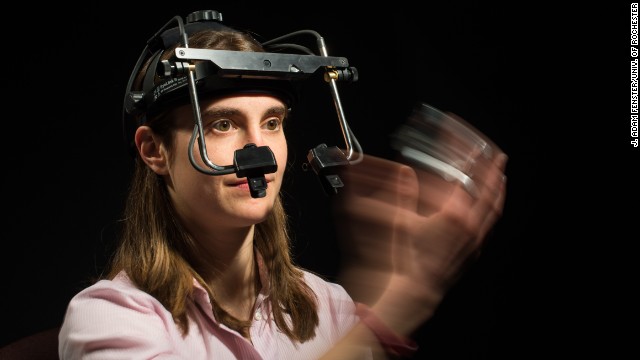
 Wave your hand slowly in front of your face.
Did your eyes track the movement? If so, your brain has formed a memory of that action; it will remember what the motion looks like in case you ever do it again.
In fact, a new study suggests that even if you wave your hand in front of your face in total darkness, your eyes may "see" it simply because they've seen it before.
"One thing our brains are exceptionally good at is picking up on reliable patterns," said lead study author Duje Tadin, professor of cognitive sciences at the University of Rochester. "Think about how many times you moved your hand and saw that movement ... It makes sense that our brains exploit this strong link."
Tadin and his colleagues conducted five experiments involving a total of 129 people. Their results were published online this week in the journal Psychological Science.
The blindfolds
For the first two experiments, participants were shown two blindfolds. They were told that one of the blindfolds "may allow a small amount of light to pass through." In reality, both blindfolds blocked all light.
In other words, participants were led to expect NOT to see with one blindfold, and to expect to MAYBE see something with the other. This produced something called "experimentally controlled expectations" so researchers could collect data in a less subjective atmosphere.
Participants were asked to wave a hand over their eyes at a slow, comfortable pace while wearing one of the two blindfolds. Researchers then asked them whether they saw anything, and if they did, what they saw.
In the first experiment, participants were told both blindfolds would be used, so they expected to potentially see in one of the two trials. In the second experiment, participants were told they had a 50/50 chance of getting the "seeing" blindfold each time.
About 50% of the participants reported experiencing some visual sensation in the first two experiments, despite being completely blindfolded; a few described well-defined forms in the darkness. Others confidently reported not seeing anything at all.
The researchers concluded that kinesthesis, or movement in your limbs, can actually generate visual sensations - but it's a learned ability.
"Our brain predicts what we are about to see and generates an image accordingly," Tadin said.
I can't see you
In the third experiment, the researcher waved his or her hand in front of the participant's face while they were blindfolded.
In the first trial, no one reported seeing the researcher's hand. In the second, only two of 16 participants reported seeing movement.
This supported the researchers' theory that you can only "see" your own body motion because your brain has so many reliable memories of its own limbs.
The super seers
In the fourth experiment, a select group of users with synesthesia replicated the first experiment. People with synesthesia experience a rare blending of the senses; some see colors when they read, others experience tastes when they speak certain phrases or words.
"What we initially discovered was a blending of the senses - our subjects had visual sensations that were caused by another sense," Tadin said. "We hypothesized that this ability to see your own hand in darkness would be stronger in synesthetes."
The synesthetes' (people who experience synesthesia) results were "literally off the chart," Tadin said; they all reported very vivid sensations of seeing their hand in motion while blindfolded.
More objective data
In the fifth experiment, researchers removed the blindfolds and placed participants in total darkness with a head-mounted eye tracker. The machine recorded their eye movement as they first waved their own hand in front of their face, then had a researcher wave his/her hand, and then waved a cardboard cutout of a hand.
This experiment provided objective evidence to back up the other experiments' findings. People who reported seeing their hand had eye movements that were twice as smooth as those who did not.
"We can only generate smooth following eye movements if we have a moving target to lock on," Tadin explained. "We had one synesthete that had perfectly smooth eye movements when following her hand in total darkness. For her, we really thought we made a mistake and left the lights on."
Takeaway
This doesn't mean that humans are preprogrammed to see in the dark. It's learned, Tadin said, and likely only applies to our own body movement.
Tadin and his colleagues hope this research can one day be used to improve hand-eye coordination. They are currently working on this idea with a group of older adults, a population that often experiences hand-eye coordination difficulties.
Source - CNN News
 সম্প্রতি এক গবেষণায় জানা গেছে, কম বয়সে অ্যান্টিবায়োটিক খেলে পরবর্তী ক্ষেত্রে মানব শরীর বিভিন্ন ধরনের রোগ প্রতিরোধ করতে সক্ষম থাকে৷ কলোম্বিয়ার ব্রিটিশ বিশ্ববিদ্যায়লের এ গবেষণা অনুযায়ী, অন্ত্রে বিভিন্ন ধরনের ব্যাকটেরিয়া বিরাজ করে, যা রোগ প্রতিরোধ ক্ষমতা স্বাস্থ্যকর রাখে৷
কিন্তু...
সম্প্রতি এক গবেষণায় জানা গেছে, কম বয়সে অ্যান্টিবায়োটিক খেলে পরবর্তী ক্ষেত্রে মানব শরীর বিভিন্ন ধরনের রোগ প্রতিরোধ করতে সক্ষম থাকে৷ কলোম্বিয়ার ব্রিটিশ বিশ্ববিদ্যায়লের এ গবেষণা অনুযায়ী, অন্ত্রে বিভিন্ন ধরনের ব্যাকটেরিয়া বিরাজ করে, যা রোগ প্রতিরোধ ক্ষমতা স্বাস্থ্যকর রাখে৷
কিন্তু...
 ঢাকা বিশ্ববিদ্যালয়ের ক্লিনিক্যাল সাইকোলজি বিভাগ ও বাংলাদেশ ক্লিনিক্যাল সাইকোলজি সোসাইটির যৌথ উদ্যোগে ‘Mental Health Gap in Bangladesh: Resources and Response’ শীর্ষক চার দিনের চতুর্থ মানসিক স্বাস্থ্যবিষয়ক আন্তর্জাতিক সম্মেলনের উদ্বোধন হয়েছে।
বুধবার ঢাকা...
ঢাকা বিশ্ববিদ্যালয়ের ক্লিনিক্যাল সাইকোলজি বিভাগ ও বাংলাদেশ ক্লিনিক্যাল সাইকোলজি সোসাইটির যৌথ উদ্যোগে ‘Mental Health Gap in Bangladesh: Resources and Response’ শীর্ষক চার দিনের চতুর্থ মানসিক স্বাস্থ্যবিষয়ক আন্তর্জাতিক সম্মেলনের উদ্বোধন হয়েছে।
বুধবার ঢাকা...
.jpg&w=60&h=40&zc=2) অনেক সময় কোনো ওষুধ একটি রোগ সারিয়ে তুললে, সেই ওষুধই অন্য একটি অসুখকে আমন্ত্রণ জানিয়ে রাখে। এমনকি এক্স রে রশ্মিও আমাদের শরীরে ক্যান্সারের মতো মারণ রোগের জন্ম দেয়।
ওষুধের প্রভাবে কী কী পার্শ্বপ্রতিক্রিয়া হতে পারে
১. ওষুধে ডায়াবিটিস বাড়তে পারে: সাধারণত ইনসুলিনের অভাবে ডায়াবিটিস হয়।...
অনেক সময় কোনো ওষুধ একটি রোগ সারিয়ে তুললে, সেই ওষুধই অন্য একটি অসুখকে আমন্ত্রণ জানিয়ে রাখে। এমনকি এক্স রে রশ্মিও আমাদের শরীরে ক্যান্সারের মতো মারণ রোগের জন্ম দেয়।
ওষুধের প্রভাবে কী কী পার্শ্বপ্রতিক্রিয়া হতে পারে
১. ওষুধে ডায়াবিটিস বাড়তে পারে: সাধারণত ইনসুলিনের অভাবে ডায়াবিটিস হয়।...
 চীনের একটি গাছের নাম হর্নি গোটউইড। এই গাছ থেকেই অদূর ভবিষ্যতে সস্তায় মিলবে ভায়াগ্রার বিকল্প ওষুধ। পুরুষাঙ্গকে দৃঢ়তা প্রদানের জন্য যে যৌগটি দরকার, সেই আইকারিন প্রচুর পরিমাণে রয়েছে হর্নি গোটউইডে।
এই উপদানটিকে প্রকৃতিক ভায়াগ্রা হিসেবে শনাক্ত করেছেন ইউনিভার্সিটি অফ মিলানের গবেষক ডা. মারিও ডেল...
চীনের একটি গাছের নাম হর্নি গোটউইড। এই গাছ থেকেই অদূর ভবিষ্যতে সস্তায় মিলবে ভায়াগ্রার বিকল্প ওষুধ। পুরুষাঙ্গকে দৃঢ়তা প্রদানের জন্য যে যৌগটি দরকার, সেই আইকারিন প্রচুর পরিমাণে রয়েছে হর্নি গোটউইডে।
এই উপদানটিকে প্রকৃতিক ভায়াগ্রা হিসেবে শনাক্ত করেছেন ইউনিভার্সিটি অফ মিলানের গবেষক ডা. মারিও ডেল...
 ব্রেন ক্যানসার চিকিৎসায় এবার ব্যবহৃত হবে সোনা৷ কারণ সোনা নাকি ব্রেন ক্যানসার থেকে মুক্তি দিতে পারে৷ বিজ্ঞান পত্রিকা ন্যানোস্কেল অনুযায়ী, ব্রেন ক্যানসারের চিকিৎসার সোনার একটি অতি সুক্ষ টুকরো সাহায্যকারী প্রমাণিত হতে পারে৷
বৈজ্ঞানিকরা একটি সোনার টুকরোকে গোলাকৃতি করে...
ব্রেন ক্যানসার চিকিৎসায় এবার ব্যবহৃত হবে সোনা৷ কারণ সোনা নাকি ব্রেন ক্যানসার থেকে মুক্তি দিতে পারে৷ বিজ্ঞান পত্রিকা ন্যানোস্কেল অনুযায়ী, ব্রেন ক্যানসারের চিকিৎসার সোনার একটি অতি সুক্ষ টুকরো সাহায্যকারী প্রমাণিত হতে পারে৷
বৈজ্ঞানিকরা একটি সোনার টুকরোকে গোলাকৃতি করে...
 বাতের ব্যথা, অনিদ্রা থেকে বার্ধক্যজনিত সমস্যা। এ সবের নিরাময়ে অশ্বগন্ধার বিকল্প নেই। তেমনটাই তো বলেন বিশেষজ্ঞরা। এমনকি যৌবন ধরে রাখতেও অশ্বগন্ধার উপকারিতা অনস্বীকার্য। ত্বকের সমস্যাতেও দারুণ কাজ দেয় অশ্বগন্ধার ভেষজ গুণ। বিদেশেও এর চাহিদা ব্যাপক। সে কারণেই অশ্বগন্ধা চাষ অত্যন্ত লাভজনক।...


.jpg&w=60&h=60&zc=2)