

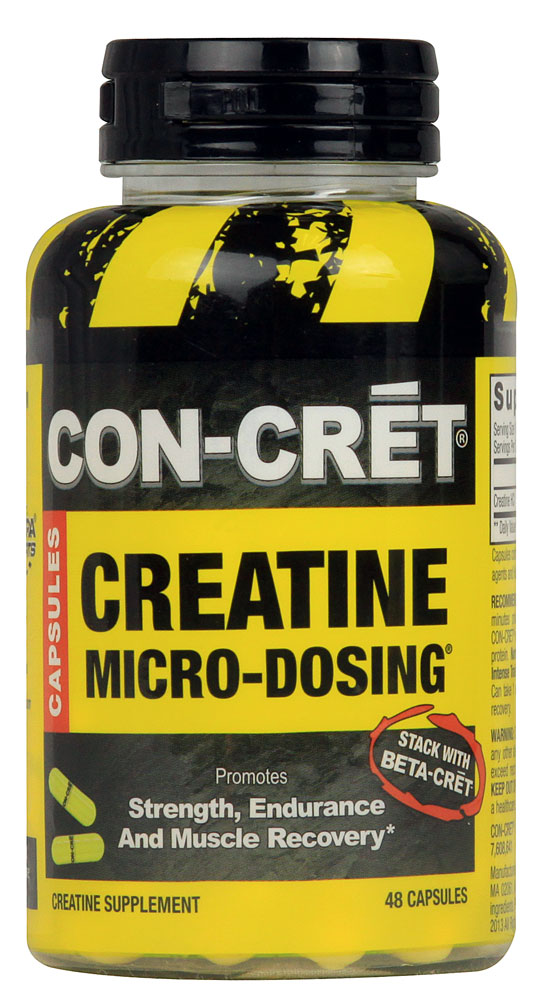

Micro Creatine
-
- Product Code
- mic0001
-
- Price
- Tk. 3,360.00
-
- Quantity
-
- Availablility
-
InStock
-
- Merchant
- GNC

What Is Creatine?
Creatine is used to supply energy to your muscles.
It’s produced naturally by the human body, primarily in the kidneys and liver, from the amino acids arginine, methionine and glycine.
Creatine is also obtained through your diet (in small amounts) from foods like red meat and certain types of fish.
Of course, 1 spoonful of a creatine supplement contains significantly more creatine than most people are capable of getting from their diet alone.
What Does It Do? What Are Its Benefits?
Like I mentioned earlier, creatine supplements are primarily used by people looking to build muscle (although it’s used for strength/performance as well).
Does creatine itself actually build muscle? No. That’s not how it works.
During exercise that requires short bursts of energy (like weight training, sprinting, etc.), the primary source of energy is Adenosine Triphosphate (ATP).
The thing is, ATP is in limited supply and it depletes rather rapidly. This of course is where creatine comes in, as it’s used to replenish the amount of ATP available.
So, in plain English, creatine increases the energy your muscles have.
This then increases the amount of work your muscles are capable of doing, which then increases what you’re capable of doing during your workouts (meaning lifting more weight and/or doing more reps).
The process of gradually increasing the amount of weight you lift and/or the number of reps you lift it for is known as progressive overload, and it’s the #1 weight training requirement for building muscle.
What creatine does is directly assist in making this process take place. Which means, in the end, creatine supplements help build muscle.
And for people who care more about strength and performance than building muscle, those benefits should now be obvious too.
In addition, creatine will also usually cause some water retention in your muscle cells. This then causes 2 things to happen: some slight weight gain (a few pounds of “water weight”) and a slight increase in the size of your muscles (both of which are typically welcome when your goal is building muscle).
And finally, even though creatine supplementation is primarily for people looking to increase muscle, strength or performance, it is also being used medically to help treat/improve a variety of neuromuscular and cardiovascular issues, and there is growing research showing that it may provide other health benefits as well (such as improved cognitive function).
However, while the evidence for adding creatine on to the list of other general use/overall health supplements is slowly building, I’m not ready to recommend it for that purpose just yet.
If you’re looking to build muscle (or improve strength/performance), then yeah, the benefits are definitely there. But if you’re not, then you probably don’t need it.
Does It Really Work?
Yes it does. Creatine has probably been the most studied and tested supplement of the last 20 years, and research (and the real world) shows that it does indeed work.
In fact, I’d even go as far as to say that creatine is the ONLY real “muscle building” supplement on the market that is scientifically proven to legitimately work.
So yes, for the majority of the people who take it, it certainly works.
Of course, there is a small minority of people who take it and notice no difference at all. They are referred to as “non-responders.”
The best explanation I’ve heard for these “non-responders” is that these are people whose bodies just naturally produce an above average amount of creatine.
Whatever it is, if you take it and give it some time and notice no benefits at all… then it’s safe to say that you’re a non-responder. In the rare case that this happens, you can stop taking it and save your money. It won’t just suddenly start working one day if it hasn’t already, so there’s no need to keep trying.
However, for the majority of the people who take it, creatine will definitely work as expected.
Is It Safe? Are There Any Side Effects?
Few supplements have been studied as much as creatine over the years (literally hundreds of studies have been done), and the results in terms of its safety are all virtually the same.
And that is, creatine supplements have NOT been shown to have any significant side effects and appear to be perfectly safe for the average healthy adult.
Obviously if you already have any kind of preexisting health/medical issues (especially something kidney related), are taking any form of medication, or have anything else going on that takes you out of the “average healthy adult” category, you should always check with your doctor first.
But, in the typical healthy adult (male or female), research shows that it is indeed safe when used properly.
In fact, the only real “side effects” I’ve ever heard over the years are extremely mild. For example, an upset stomach and muscle cramps.
However, both of these issues are usually a result of improper creatine use and can VERY easily be avoided completely. The 3 most common causes here are not drinking enough water, taking too much creatine, and using a crappy/low quality product.
So, how do you avoid these mild side effects?
When and How Should It Be Taken?
On the days you work out, there is some debate over when the best time to take creatine is: before your workout or after your workout.
In my opinion (and the opinion of most experts), it’s probably best to take it after your workout as part of your POST workout meal. That’s how I’ve always done it.
So if you’re having a shake/liquid meal of some sort then, just throw the creatine in with your protein powder and whatever else. If you’re having a solid food meal instead, just mix it with some water (or really any liquid) and drink it during this meal.
On the days you DON’T work out, it really doesn’t matter when you take it. So, feel free to take it whenever is most convenient for you on those days.
Again, just mix it with some kind of liquid (anything is fine) and drink. Don’t make it any more complicated than that.
How Much Creatine Should I Take Per Day?
You should take 3-5 grams of creatine per day. No more than that.
You may have heard that you need to “load” creatine. In fact, instructions for how to do so are included on virtually all creatine supplements.
However, you don’t, and you probably shouldn’t.
The usual “loading phase” recommendations for creatine are to take about 20 grams per day for the first week or so, and then anywhere from 5-10 grams per day after that.
This is all completely unnecessary and won’t accomplish anything special other than saturating your muscles faster and causing you to run out of creatine sooner (which is terrific if you’re the creatine supplement company).
Not to mention, the high amounts of creatine taken during the typical loading phase is probably one of the #1 causes of the mild side effects (stomach discomfort) I mentioned before.
For this reason, I (and most others) do not recommend loading creatine. Instead, just skip the loading phase entirely.
Sure, the one “benefit” and overall purpose of loading creatine in the first place is to fully saturate your muscles with creatine as quickly as possible.
The thing is, your creatine stores can become fully saturated just the same without the high dose loading phase.
Meaning, if 20 grams per day will fully saturate your muscles in 5 days, taking 5 grams per day will do it just the same but in more like 20-30 days… AND without the mild side effects that often come with taking high/stupid amounts of creatine.
So, what I and many others recommend instead is this
pack size: 180 capsule


